Polyurethane materials, renowned for their exceptional physical properties, have become critical components for mobile equipment across industrial sectors. However, performance requirements for polyurethane wheels vary significantly across industries, rendering simple “universal” products inadequate for meeting the stringent demands of specialized applications. This diversification of needs is driving polyurethane wheels from standardized products toward specialized solutions.
Decoding Industry Demands: From Fundamental Performance to System-Level Standards
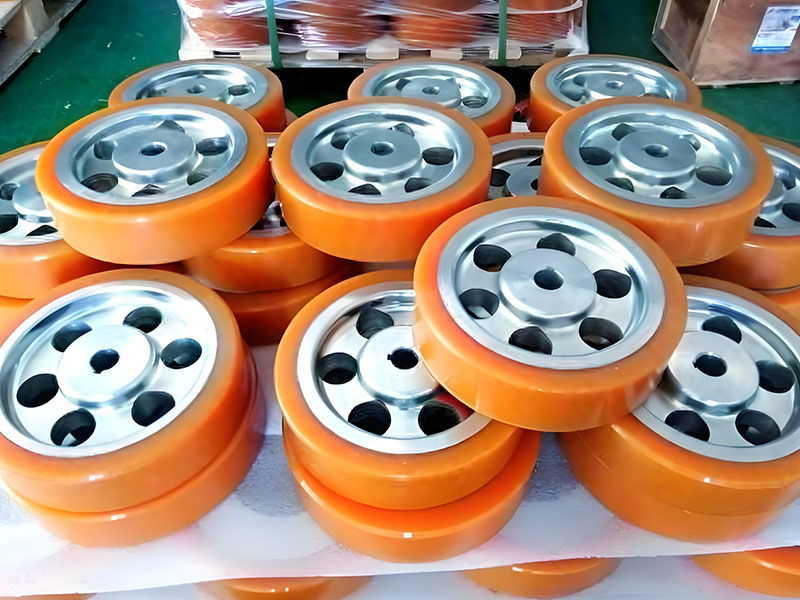
1. Logistics and Material Handling: Dual Challenges of Efficiency and Economy
In logistics and material handling, polyurethane wheel performance directly impacts operational costs and system efficiency:
High Abrasion Resistance: In automated warehousing systems, AGVs travel over 50 kilometers daily, requiring specialized formulations with an abrasion resistance index ≥100.
Optimized Low Rolling Resistance: Reducing energy consumption by 10%-15% translates to annual electricity savings of hundreds of thousands of yuan for large electric vehicle fleets.
Dynamic Performance Stability: In scenarios with up to 6 emergency stops/starts per minute, material impact resistance determines equipment lifespan.
2. Semiconductor Industry: Precision Balance of Cleanliness and Conductivity
Semiconductor manufacturing environments impose near-demanding requirements on polyurethane wheels:
Anti-static rating: Surface resistance must remain stable between 10^6–10^9Ω, preventing static buildup while avoiding excessive conductivity.
Ultra-low dust emission standards: Airborne particle levels must fall below ISO Class 5 per cubic meter, with material purity determining cleanliness grades.
Chemical Resistance: Must withstand prolonged exposure to cleaning agents like isopropyl alcohol and acetone.
3. Automotive Manufacturing: Dual Demands for High Strength and Precision
Automotive production lines impose specific requirements on polyurethane wheels:
Controllable Friction Coefficient: During precision assembly on final assembly lines, friction must remain stable between 0.35–0.45 to ensure positioning accuracy.
High-Speed Dynamic Performance: When conveyor line speeds reach ≥2m/s, material temperature rise must be controlled within 15°C to prevent thermal aging.
Superior Wear Resistance: In welding shop environments with metal debris, wear resistance must exceed standard industrial levels by over 3 times.
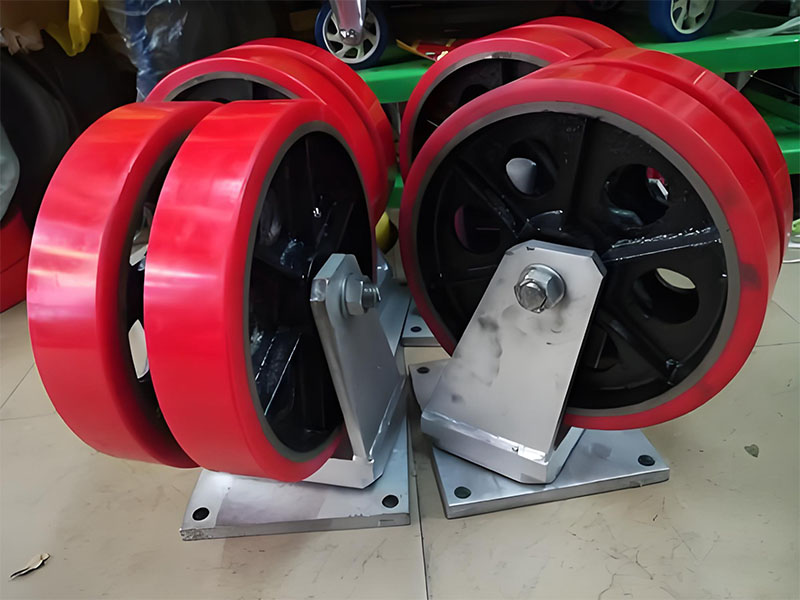
4. Mining Machinery: Performance Limits Challenged in Extreme Environments
Mining operations subject polyurethane wheels to multiple tests:
Hydrolysis Resistance: In humid mine environments, water absorption must remain below 0.5% to prevent performance degradation.
Chemical Corrosion Resistance: Withstands acidic and alkaline media across a pH range of 3-11.
Enhanced Tear Resistance: Tear strength must exceed 120 kN/m to withstand shear stresses from sharp ore fragments.
5. Medical Equipment: The Ultimate Standard for Safety and Cleanliness
Medical environments demand polyurethane wheels that embody human-centered care:
Ultra-Quiet Operation: Noise levels must remain below 55dB to ensure peaceful patient environments.
Mark-Free Movement: Wheel surface formulations must leave no residue to protect expensive medical flooring.
Antimicrobial Treatment: Surfaces require antibacterial properties to reduce cross-infection risks.
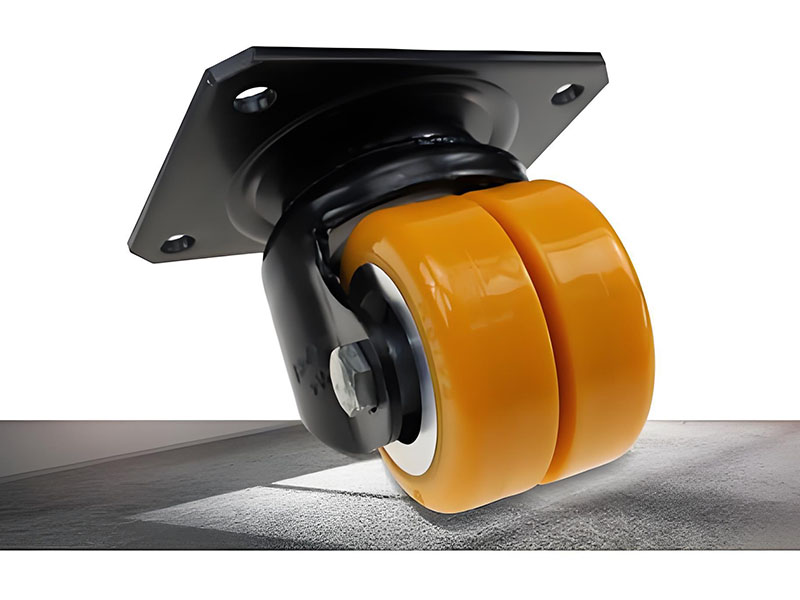
YALIDE’s Industry Solution System
Based on deep understanding of diverse industry needs, we have established a comprehensive solution system:
Industry Database System: Accumulated over 2,000 industry application cases, built a complete failure mode analysis library, and developed industry-specific performance prediction models.
Modular Formulation Platform: Polyurethane wheel basic performance modules (load-bearing, abrasion resistance); Polyurethane Wheel Environmental Adaptation Modules (temperature, chemical resistance); Polyurethane Wheel Special Function Modules (conductivity, noise reduction); “Formulation combinations” tailored to specific requirements.
Full-Process Validation System: Laboratory accelerated testing (simulating 3 years of use); Small-batch field validation (3-6 months of actual operation); Continuous performance data tracking (establishing service life curves).
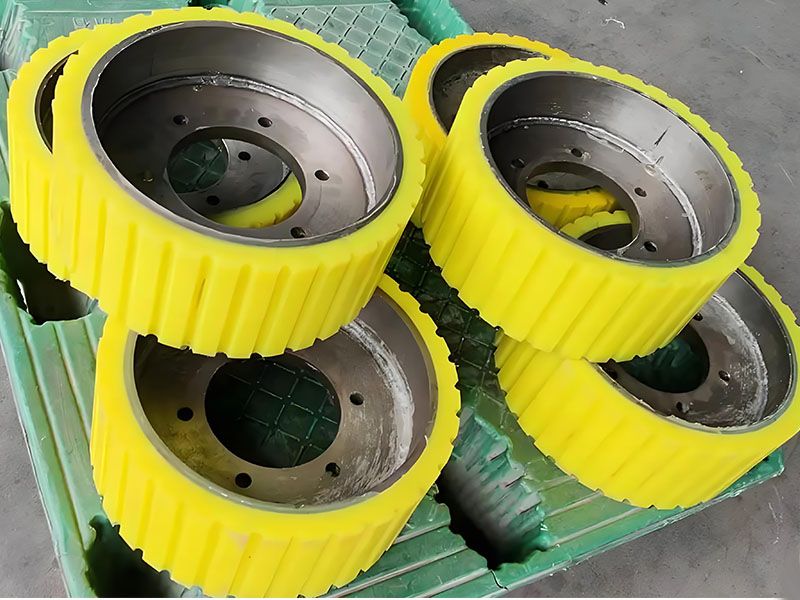
Selection Recommendations: The Upgrade Path from General to Specialized
Consider industry-specific polyurethane wheels when your application exhibits these characteristics:
1. Equipment annual operating time exceeds 4000 hours
2. Presence of special environmental factors (chemical, electrostatic, cleanroom, etc.)
3. Equipment downtime costs exceed wheel procurement costs by 10x
4. Clear ROI requirements for floor protection
5. Industry-specific certification standards (medical, food, etc.)

YALIDE Polyurethane Wheel Manufacturer
The technological evolution of polyurethane wheels fundamentally translates the “mobility requirements” of diverse industries. From logistics’ “economy language,” semiconductors’ “cleanliness language,” and automotive’s “precision language,” to mining’s “durability language” and healthcare’s “safety language”—each sector demands specialized technical solutions.
YALIDE is committed to being the translator and solution provider for these “industry languages.” We believe truly professional polyurethane wheels aren’t designed in laboratories, but evolve through deep understanding of industry pain points, continuous tracking of field requirements, and relentless optimization and validation.
When you need mobility solutions, remember: The best choice isn’t the “most universal” product, but the partner who “best understands your industry language.”


 Monday to Friday 8:00-17:00
 YALIDE >
News Content>Industry News> How Different Industries Precisely Select Suitable Polyurethane Wheels
YALIDE >
News Content>Industry News> How Different Industries Precisely Select Suitable Polyurethane Wheels 





 Telephone:
  Email:
  whatsApp: