In industrial manufacturing, logistics transportation, automation equipment, and other fields, polyurethane wheels have become indispensable key components. When procurement personnel ask, “How much does a polyurethane wheel cost?” the quoted prices can range from tens to thousands of yuan. What value logic lies behind this enormous price disparity? Today, let’s delve into the price structure of polyurethane wheels.
I. Material Formulation: The Chemical Code Behind Price Variations
The “core” of polyurethane wheels—their material formulation—is the primary factor determining price. Different polyurethane formulations yield vastly different performance characteristics and costs.
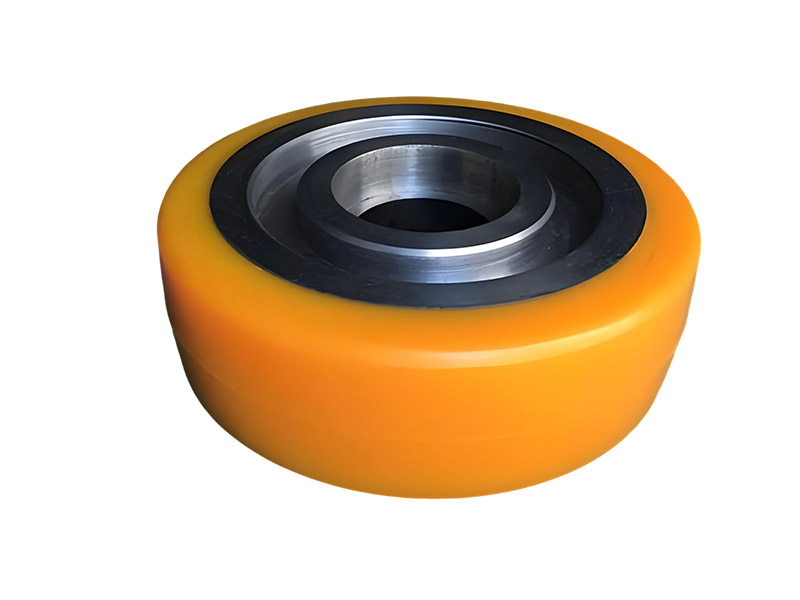
1. Basic Polyurethane Wheels (Market Price: ¥20-100/unit)
These wheels typically utilize general-purpose polyether polyurethane with a hardness between 80A-90A. They are suitable for low-load applications without special environmental requirements, such as light-duty hand trucks, furniture casters, and standard warehouse equipment. Highly standardized and subject to intense market competition, these products offer the most affordable pricing.
2. High-Performance Polyurethane Wheels (Market Price: ¥100-500/piece)
When applications demand higher abrasion resistance, load capacity, or special environmental adaptability, material formulations require upgrades:
High Abrasion Resistance Formulation: Incorporates ceramic microbeads, carbon fiber, and other reinforcing materials, boosting abrasion resistance by 3-5 times. Suitable for high-frequency conveyor lines and sorting equipment.
High Load Capacity Formulation: Utilizes specially modified polyurethane systems achieving hardness of 95A-98A while maintaining excellent elasticity. Used in heavy-duty equipment.
Special Environment Formulations: Oil-resistant, hydrolysis-resistant, low-temperature resistant (-40°C without brittleness), anti-static, etc. (Formulation cost increases by 30%-100%)
3. Special Engineering Polyurethane Wheels (Market Price: ¥500-2000/unit)
This represents the “high-end customization” segment of polyurethane wheels, commonly used in extreme conditions:
Mining-specific formulations: Tear strength >150 kN/m, Akron abrasion <0.02 cm³/1.61 km
Food/pharmaceutical-grade formulations: FDA/EU certified, non-toxic/odorless, resistant to cleaning agent corrosion
Ultra-quiet formulations: Precise dynamic friction coefficient control, noise <45 dB, for precision labs/medical equipment
Material Cost Comparison Example: Standard polyurethane raw materials cost approximately 20-30 RMB/kg, while high-performance formulations with nano-reinforced materials reach 60-100 RMB/kg. Specialized formulations can exceed 150-300 RMB/kg.
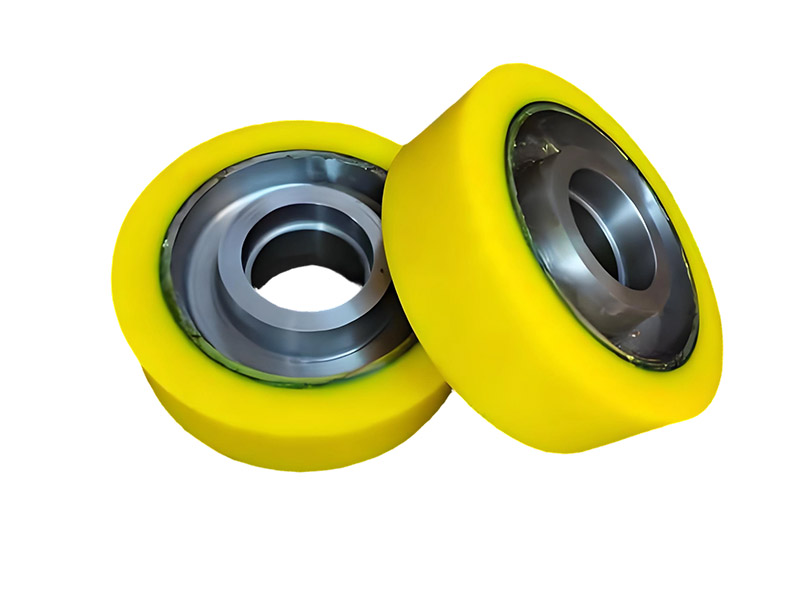
II. Dimensions & Specifications: Price Function of Geometric Dimensions and Load Capacity
Polyurethane wheel pricing exhibits a nonlinear relationship with physical dimensions, reflecting material consumption, manufacturing complexity, and load requirements.
Small Wheel Series (Diameter 50-100mm)
Light Load Capacity (50-200kg/wheel): ¥60-150
Medium Load Capacity (200-500kg/wheel): ¥150-400
Price Variation Factors: Wheel width, bearing type, rubber layer thickness
Medium Wheel Series (Diameter 100-200mm)
Standard Load Capacity (500-1500kg/wheel): ¥300-800
Heavy Load Capacity (1500-3000kg/wheel): ¥800-2000
Key Cost Factors: Complexity of metal core structure, polyurethane coating thickness, dynamic balancing precision
Large Wheel Series (Diameter 200-500mm+)
Super Heavy-Duty Applications (3-10 tons/unit): ¥2000-8000
Special Engineering Applications: Up to ¥10,000+
Cost Composition Characteristics: Requires large-scale vulcanization equipment, extended curing time (potentially several hours), specialized heat treatment processes
An interesting phenomenon: Doubling the diameter may increase the price by 3-5 times rather than simply doubling, as process control challenges for large-diameter wheels grow exponentially—uniformity of rubber vulcanization, internal bubble control, and metal-polyurethane bonding reliability all present greater difficulties.
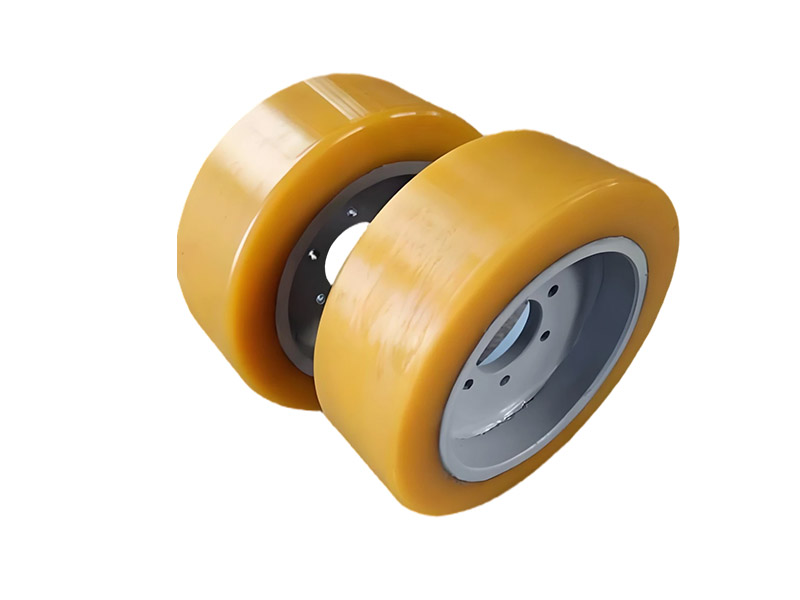
III. Structure and Process: The Unseen Cost Investment
1. Metal Core Structure
Simple Sleeve Type: Lowest cost, suitable for manual equipment
Precision Bearing Integrated Type: Features deep groove ball bearings, needle roller bearings, or composite bearings, increasing price by 30%-100%
Custom Flange Type: Requires CNC precision machining for specialized installation requirements, increasing cost by 50%-150%
2. Bonding Process Standards
Standard bonding: Simple mechanical compression or basic adhesive
High-strength bonding: Triple assurance via dovetail grooves + chemical bonding + high-temperature vulcanization, ensuring polyurethane layers remain bonded to metal cores under extreme loads—core value for mining and port machinery wheels. Process cost increases by 40%-80%
3. Precision Grades
Commercial Grade: Radial runout < 0.5mm
Industrial Grade: Radial runout < 0.2mm, requires dynamic balancing
Precision Grade: Radial runout < 0.05mm, used in high-speed automation equipment and precision instruments
Each precision grade upgrade may increase machining and inspection costs by 30%-50%.
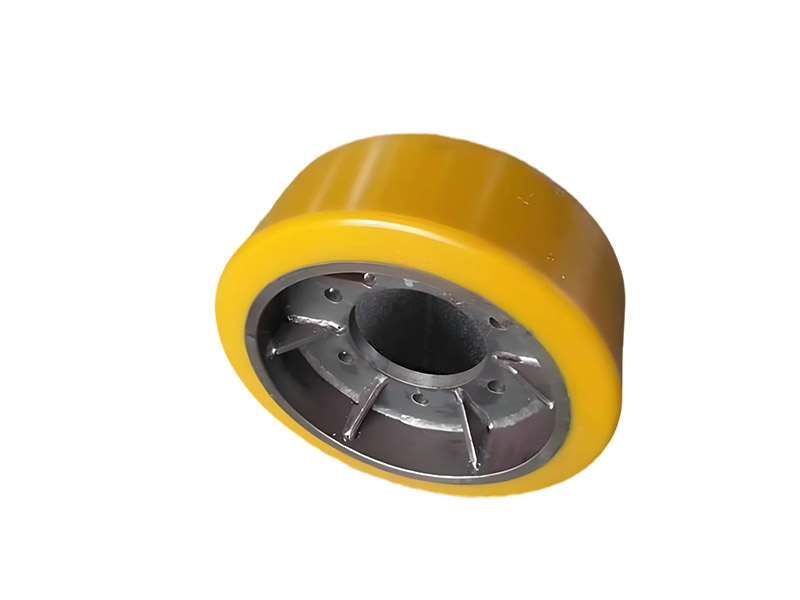
IV. Procurement Wisdom: Evaluating the True Value of Polyurethane Wheels
1. Lifecycle Cost Calculation
Don’t focus solely on purchase price. Calculate total cost of ownership over 3-5 years: procurement cost + replacement frequency + downtime losses + energy consumption differences
2. Quantitative Performance Metrics
Require suppliers to provide: Abrasion volume (Akron test), Compression set rate, Dynamic heat generation data, Adhesion strength test reports
3. Application Compatibility Analysis
Best-fit solutions are optimal—equipping standard warehouse carts with mining-grade polyurethane wheels constitutes overinvestment, while selecting low-cost wheels for high-speed conveyor lines creates hidden cost traps
4. Supplier Technical Capability Assessment
Can they provide customized solutions? Do they operate material laboratories? Do they master core bonding technologies? These “soft competencies” ultimately translate into product reliability and comprehensive value.

Conclusion: Price is a number; value is the answer.
Returning to the question “How much does a polyurethane wheel cost?”, the answer is now clear: it could be a ¥60 furniture caster or an ¥8,000 port crane load-bearing wheel. This price disparity fundamentally reflects differences in performance, lifespan, and risk mitigation capabilities.
Against the backdrop of Industry 4.0 and smart manufacturing, polyurethane wheels are no longer mere “consumables.” They are critical system components that impact equipment reliability, operational efficiency, and maintenance costs. Choosing the right polyurethane wheel is an investment in extended trouble-free operation, lower total cost of ownership, and enhanced production safety.
In this specialized field, the most costly expense is never the product price itself, but the hidden losses stemming from incorrect choices. The wisest investments are always those that consistently generate operational value.


 Monday to Friday 8:00-17:00







 Telephone:
  Email:
  whatsApp: