In the realm of moving components for heavy machinery and specialized equipment, when rigid wheels alone fail to meet the demanding requirements of complex terrain adaptability, high load capacity, and exceptional traction, industrial polyurethane track wheel systems emerge as an engineering solution that breaks through traditional limitations. This breakthrough is achieved through their unique blend of rigidity and flexibility. This represents not merely a wheel replacement but a comprehensive revolution in traction, durability, and environmental adaptability for extreme applications.

I. Core Application Scenarios: From Precision Agriculture to Emergency Rescue
1. The “Ground Guardian” for Agricultural and Construction Machinery
Precision Agricultural Machinery: Large sprayers, fertilizer spreaders, and precision seeders require operation without disrupting soil structure. Polyurethane track systems, with their extremely low ground pressure (below 20 kPa), significantly reduce soil compaction, protect crop root systems, and deliver robust traction to ensure equipment mobility in wet, soft fields. Their smooth track surfaces resist soil adhesion, minimizing maintenance.
Small Multi-Functional Construction Machinery: For compact tracked excavators, telescopic forklifts, and similar equipment operating in landscaping, greenhouses, factory workshops, and other environments requiring floor protection, polyurethane tracks serve as the ideal alternative to steel or rubber tracks. They effectively prevent scratching asphalt, epoxy flooring, or other sensitive surfaces.
2. The “Load-Bearing Experts” for Specialized Transport & Logistics
Heavy-Duty AGVs/AMRs: In automated warehouses, mobile robots handling loads ranging from several tons to dozens of tons demand exceptional ground pressure distribution and stability. Polyurethane track systems evenly disperse massive loads, preventing indentations on warehouse floors while delivering outstanding maneuverability and stability through independent multi-track drive.
Airport Special Vehicles: Aircraft tugs, baggage carts, and similar vehicles require smooth, safe operation on polished aprons and sensitive pavement surfaces. The flexibility and high friction properties of polyurethane tracks deliver reliable traction while minimizing wear risks on costly surfaces.
3. “All-Terrain Pioneers” for Extreme Environments and Emergency Response
Firefighting and Emergency Rescue Robots: In complex hazardous environments like rubble, steep slopes, and muddy terrain, reconnaissance or firefighting robots demand unparalleled mobility and reliability. Polyurethane tracks offer outstanding heat resistance, flame retardancy (achievable through specialized formulations), and chemical corrosion resistance, making them the ideal footing solution for such “pioneer” equipment.
Polar Research and Specialized Surveying Equipment: In extreme cold, conventional materials become brittle and fail. Track systems made from specialized low-temperature polyurethane formulations (maintaining elasticity at -50°C) provide reliable mobility across ice sheets and snowfields.
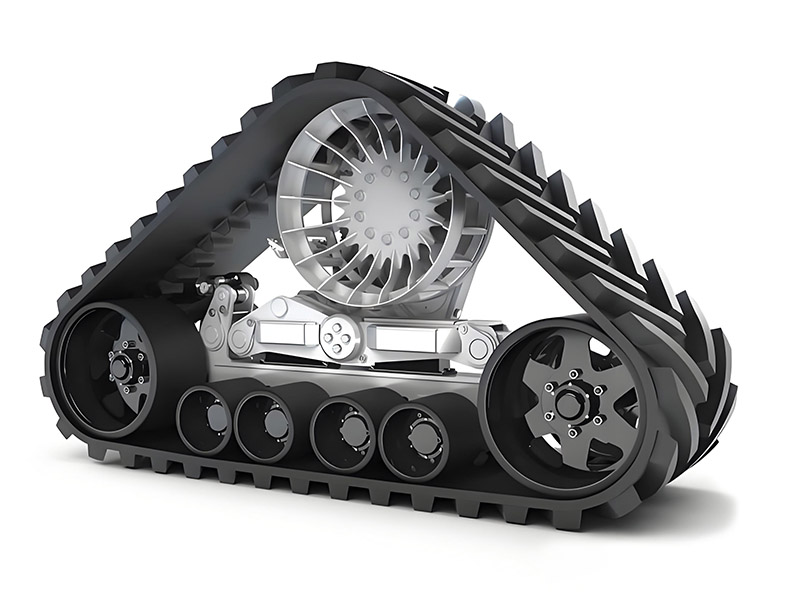
II. Demanding Challenges: The “Battlefield” for Technological Breakthroughs
Applying polyurethane materials to track systems presents a series of engineering challenges far exceeding those of conventional rubber-covered wheels:
Challenge One: The Dynamic Heat Generation and Thermal Aging “Curse”
During high-speed, heavy-load, continuous turning operations, the polyurethane blocks undergo intense cyclic compression and deformation between the drive wheels, idler wheels, and the ground, generating significant hysteretic heat. Internal temperatures can rapidly surge above 100°C, causing material softening, abrupt degradation of physical properties, accelerated aging, and even melting. Solutions include: developing ultra-low heat-generating high-performance polyurethane elastomer formulations (e.g., using specialized polyether and chain extender systems); optimizing track block structural design to incorporate heat dissipation channels; and employing hollow or composite metal cores to enhance thermal conductivity.
Challenge Two: The Ultimate Test of Structural Integrity and Tear Resistance
Common issues like “blistering” and “chipping” in traditional rubber tracks present even more severe challenges for polyurethane tracks. Enormous driving forces and impact shear forces from ground obstacles concentrate at track pin holes, articulation points, and ground contact teeth. The solution is systematic: Employ “steel core-polyurethane” composite reinforcement technology, embedding high-strength fibers or steel cord at critical stress points; design a scientific articulation system balancing flexibility and tensile strength; optimize track tooth profiles and distribution to enhance traction while dispersing stress.
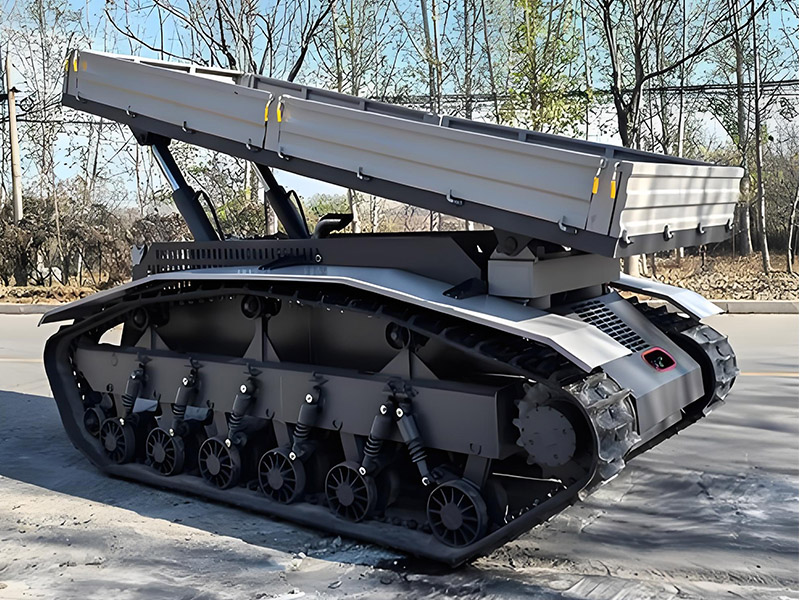
Challenge Three: “Chemical and Physical Assault” in Complex Environments
Beyond conventional oil contamination and ozone exposure, track systems may endure prolonged immersion in muddy water, corrosion from pesticides and fertilizers, or exposure to UV radiation and extreme temperatures. This demands material formulations with comprehensive environmental tolerance. Development requires:
– Highly hydrolytic-resistant polyurethane systems to prevent moisture ingress causing material swelling and strength degradation; UV-resistant additives and anti-mold agents; customized corrosion-resistant formulations for specific chemicals (e.g., deicing salts, hydraulic fluids).
Challenge Four: The “Synergistic Game” of System Integration and Long-Term Reliability
Polyurethane track shoes are not isolated components; their performance depends on perfect compatibility with drive wheels, idler wheels, tensioning systems, and the equipment’s power transmission. Any mismatch can cause abnormal wear, track deviation, or detachment. This demands suppliers to adopt a holistic system solution approach, providing end-to-end services including design matching, dynamic simulation, installation commissioning, and maintenance training.
III. Core Performance Requirements in Application Scenarios
To address the aforementioned scenarios and challenges, industrial polyurethane track rollers must meet a series of stringent quantitative and qualitative requirements:
1. Exceptional Mechanical Performance Metrics
Tensile Strength and Abrasion Resistance: Typically requires tensile strength >40 MPa and tear strength >120 kN/m to ensure structural integrity under immense traction forces and obstacle impacts.
Dynamic Load Capacity and Wear Resistance: Must withstand continuous dynamic loads of hundreds of kilograms per linear centimeter, with Akron abrasion values far below standard tire specifications (e.g., <0.05 cm³/1.61km).
Compression Set: Extremely low compression set (e.g., <15% after 70°C × 22h) is critical for maintaining long-term track tension, preventing slippage, and avoiding derailment.
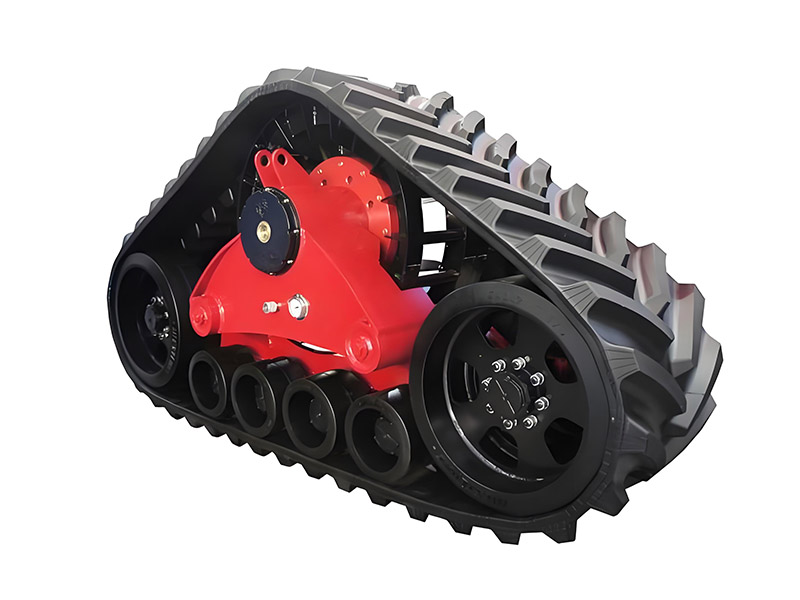
2. Precise Dynamics and Handling Characteristics
Ride Comfort and Low Vibration: Superior shock absorption protects upper equipment and precision instruments while enhancing operator comfort.
Precise steering and control response: Track system design must be highly matched with the vehicle’s steering mechanism and control system to achieve precise differential steering or slip steering.
Low rolling resistance and high transmission efficiency: Optimized track pitch, tooth profile, and material hardness matching reduce energy consumption while ensuring traction.
3. Ultimate Durability and Environmental Adaptability
Extended Service Life: Designed for thousands of operating hours in demanding conditions, far exceeding standard rubber tracks.
Wide Temperature Stability: Operates reliably from -40°C to 80°C without significant performance degradation.
Environmental Aging Resistance: Features long-term UV resistance, hydrolysis resistance, and tolerance to specific chemicals.
4. Sustainability and Cost-Effectiveness
Repairability and Modular Design: Allows individual replacement of damaged track blocks or hinge components, substantially reducing total lifecycle costs.
Environmentally Friendly: Materials are recyclable, and operation causes no damage to sensitive surfaces, aligning with green manufacturing and sustainable development principles.
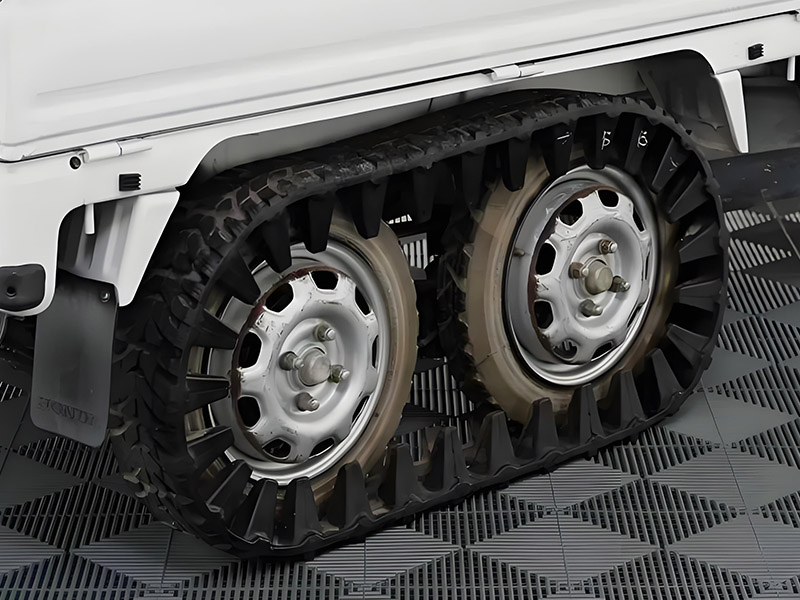
Yalide: Industrial Polyurethane Track Manufacturer
Industrial polyurethane track wheels have evolved from an alternative solution into an indispensable performance determinant for high-value, demanding specialty applications. They embody an engineering philosophy: when confronting extreme real-world challenges, the most powerful solutions are often not the hardest, but those that combine a resilient core with intelligent adaptability—a “flexible armor.” Selecting an exceptional polyurethane track system means more than choosing a component—it empowers your heavy equipment with the extraordinary capability and value to conquer limits and deliver enduring performance.
Yalide is a national high-tech enterprise specializing in the development, molding, design, manufacturing, and testing of polyurethane materials, dedicated to producing polyurethane wheels. We focus on developing and applying high-performance NDI polyurethane materials. Through diverse production processes and robust engineering capabilities, we manufacture premium polyurethane wheels and rollers while delivering complete wheel system solutions. Our client base spans the United States, Europe, Japan, South Korea, Southeast Asia, and beyond.


 Monday to Friday 8:00-17:00
 YALIDE >
News Content>Industry News> Industrial Polyurethane Track Wheels: The “Flexible Iron Armor” for Extreme Conditions
YALIDE >
News Content>Industry News> Industrial Polyurethane Track Wheels: The “Flexible Iron Armor” for Extreme Conditions 





 Telephone:
  Email:
  whatsApp: