The technological competition between polyurethane wheels and rubber wheels has been ongoing for many years in the selection of wheels for forklifts and intelligent logistics equipment. With the increasing demands for efficiency, precision, and sustainability in modern warehousing environments, this competition has evolved from a simple cost comparison to a comprehensive consideration of system level performance.
Comparison of Core Performance Dimensions
1. Bearing capacity and ground protection
Polyurethane wheels : The compressive strength per unit area is 30% -50% higher than that of rubber, and the uniform hardness distribution makes pressure dispersion more reasonable. Excellent protection for precision floors such as epoxy flooring and diamond sand, leaving almost no pressure marks.
Rubber wheel : Excellent elasticity, but prone to deformation under heavy loads, and may produce permanent indentation after prolonged static pressure. Good protection for soft ground, but insufficient protection for hard precision ground.
Technical fact : Under a rated load of 1.5 tons, the grounding area of high-quality polyurethane wheels can be reduced by 25% compared to rubber wheels, but it can achieve better ground protection effect.

2. Wear resistance and service life
Polyurethane wheels : The wear resistance coefficient is usually 5-8 times that of rubber. Under flat ground conditions, the service life can reach 2-3 years (24-hour continuous operation).
Rubber wheels : Under the same working conditions, their lifespan is usually 6-12 months, and their performance deteriorates significantly in the later stages of wear.
Economic calculation : Although the procurement cost of polyurethane wheels is 30% -50% higher, their lifespan of more than three times reduces the average annual cost by 40% -60%.
3. Rolling resistance and energy consumption
Polyurethane wheels : The low rolling resistance formula can reduce driving energy consumption by 10% -15%, especially in electric equipment such as AGVs.
Rubber wheels : The characteristic of delayed deformation recovery leads to high rolling resistance and significant differences in energy consumption during long-term operation.
Actual case : After 200 AGVs in a certain e-commerce warehouse switched to polyurethane wheels, they saved over 80000 kWh of electricity annually.
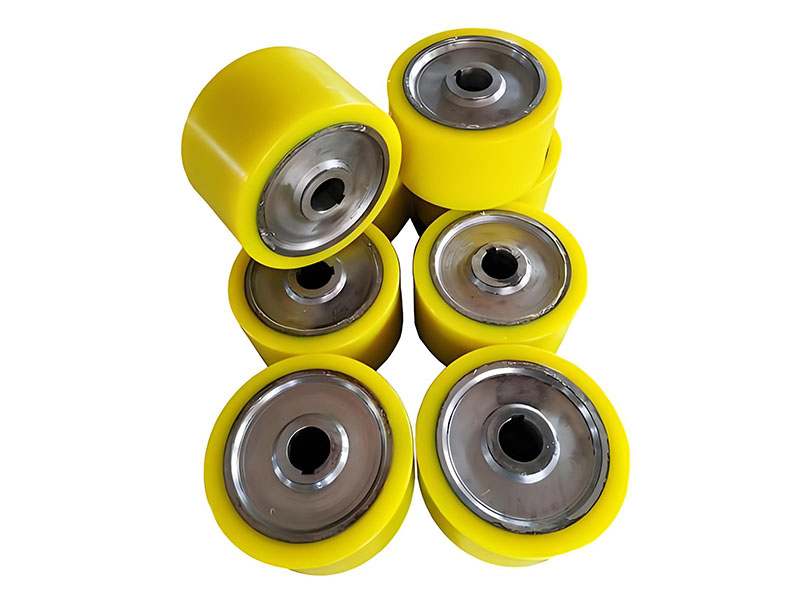
Special environmental adaptability
1. Temperature adaptability
Polyurethane wheels : High quality formula can maintain stable performance from -40 ℃ to+80 ℃, and are widely used in cold chain warehousing.
Rubber wheels : easy to harden and crack at low temperatures (below -10 ℃), easy to soften and deform at high temperatures (above+60 ℃).
2. Chemical tolerance
Polyurethane wheels : resistant to grease, most solvents, and weak acids and bases, suitable for industries such as chemical and food.
Rubber wheels : Poor oil resistance, prone to expansion and deformation when exposed to grease, with a narrow range of chemical resistance.
3. Cleanliness requirements
Polyurethane wheels : can be made into silicon free and dust-free formulas, meeting the requirements of ISO Class 5 or above clean rooms.
Rubber wheels : prone to particle detachment and surface adsorption of dust.
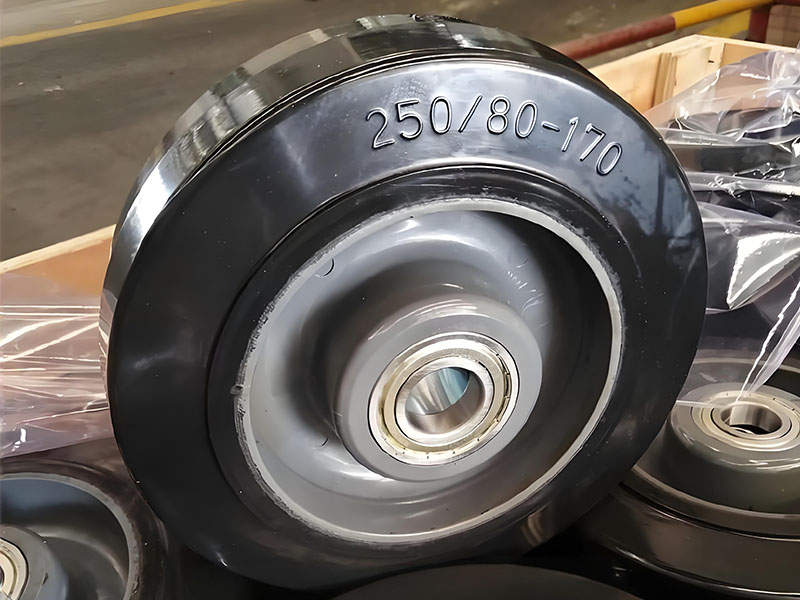
Differentiated performance of intelligent warehousing scenarios
AGV/AMR application:
Polyurethane wheels : excellent precision retention, good navigation stability, and operating noise below 65dB
Rubber wheels : good vibration absorption but poor precision retention, with noise typically exceeding 75dB
Multi layer shuttle system:
Polyurethane wheels : High speed operation (above 4m/s) with good stability and a lifespan of over 20000 hours
Rubber wheels : significant temperature rise at high speeds, prone to thermal aging
Heavy load handling scenario:
Polyurethane wheels : With a heavy load of over 5 tons, they have obvious advantages and can quickly recover from deformation
Rubber wheels : still have cost advantages in light load scenarios below 2 tons
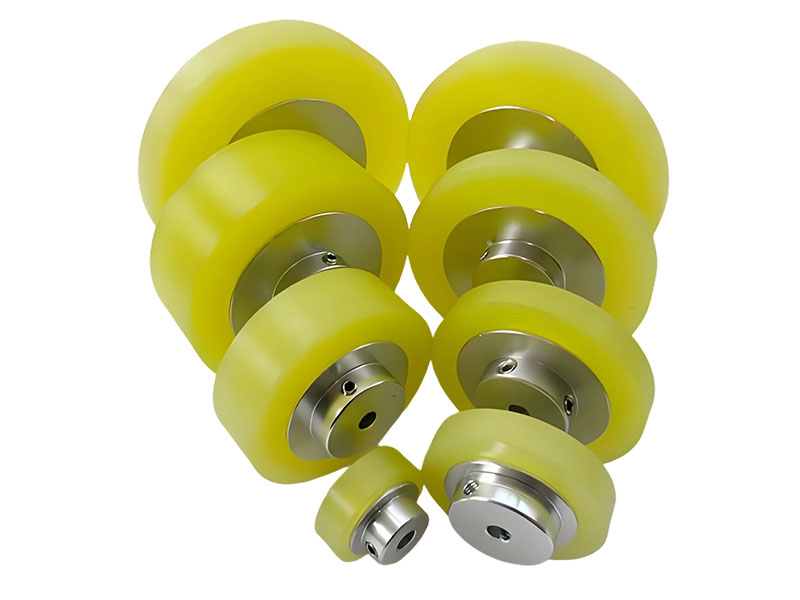
Technological Evolution Trends
Innovation direction of polyurethane wheels:
Intelligent compounding : embedded sensing chip, real-time monitoring of wear and load
Adaptive material : Hardness automatically adjusts with temperature/load
Environmental upgrade : The content of bio based polyurethane can now reach 40%
Improvement space for rubber wheels:
Application of composite materials : Improving surface wear resistance by compounding with polyurethane
Structural optimization : honeycomb structure design improves load-bearing distribution
Recycling : The recycling rate can reach over 60%
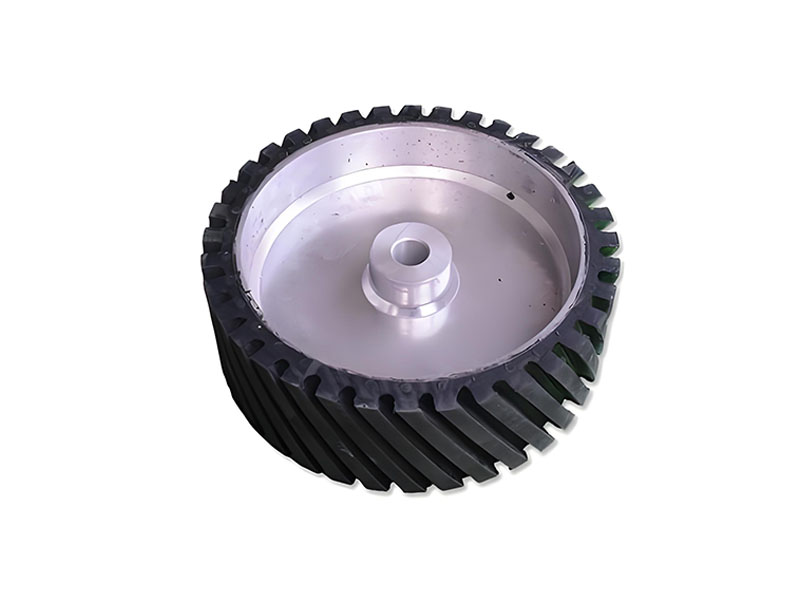
Conclusion
In the fields of intelligent warehousing and modern logistics, polyurethane wheels have shifted from being a “high-end option” to a “basic configuration”. Its technological advantages are not only reflected in a single performance parameter, but also in the deterministic guarantee provided for the entire logistics system – deterministic service life, deterministic operational accuracy, and deterministic maintenance cycle.
Rubber wheels still have value in certain specific scenarios, but polyurethane wheels represent the direction of industry development. With the advancement of materials science and the promotion of large-scale production, the price difference between the two is continuously narrowing, while the performance gap is constantly widening.
YALIDE’s solution: We do not simply recommend “replacing rubber with polyurethane”, but provide material optimization and matching services based on specific working conditions. By conducting ground surveys, analyzing equipment, and modeling operational data, find the most cost-effective solution for each application scenario.


 Monday to Friday 8:00-17:00







 Telephone:
  Email:
  whatsApp: