In the world of efficient industrial equipment operation, wheels often play the most fundamental yet pivotal role. Among them, polyurethane wheels with bearings have become indispensable key components in numerous high-end applications, combining the exceptional properties of polyurethane material with the smooth rotation of precision bearings. As a national high-tech enterprise specializing in high-performance polyurethane wheel system solutions, YALIDE today provides an in-depth analysis of this product’s applications, selection criteria, and value.
I. What Key Sectors Are Driven by Polyurethane Wheels with Bearings?
The bearing design endows polyurethane wheels with low-friction, high-precision, and long-life rotational characteristics. It is not merely “a wheel,” but a complete motion module integrating load-bearing, shock absorption, guidance, and drive functions. Its primary applications span numerous critical segments of modern industry:
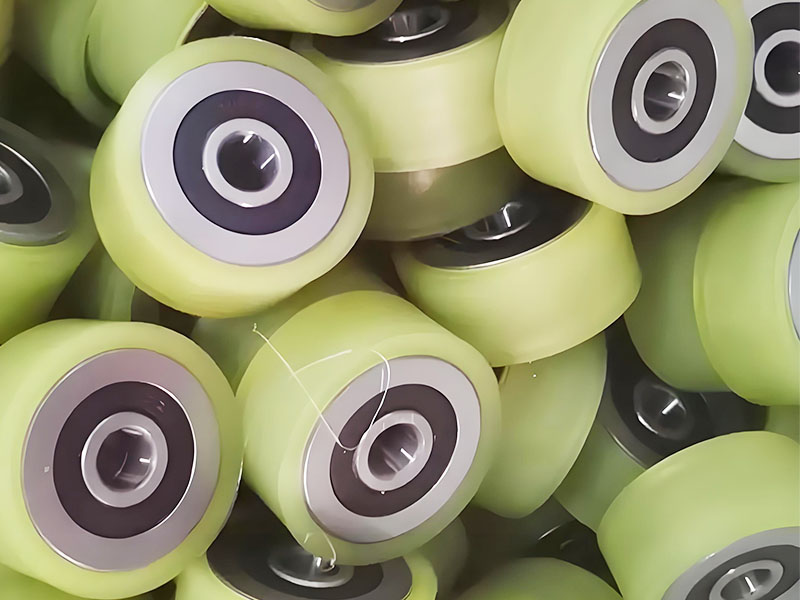
1. Automated Logistics and Intelligent Warehousing Systems
High-Speed Sorting Lines: Enable high-speed, low-noise, and smooth operation of express parcels and cargo containers on conveyor lines.
AGV/AMR Automated Guided Vehicles: Functioning as drive or load-bearing wheels, they demand exceptional rotational precision, low starting torque, and extended maintenance intervals to ensure precise docking and path-following capabilities.
Stacker Cranes & Shuttle Vehicles: Frequent starts/stops and high-speed traversing within automated warehouses require outstanding wear resistance and highly reliable bearings.
2. High-End Manufacturing & Precision Equipment
Production Line Fixtures/Pallet Conveyance: On lean production lines, roller casters with bearings ensure heavy workpieces or pallets can be manually or automatically pushed with ease and stability, significantly reducing worker fatigue.
Mobile platforms for precision instruments: Serving as movable bases for large testing equipment and experimental apparatus, these require smooth, jam-free movement. Polyurethane surfaces protect floors while absorbing vibrations and reducing noise.
Printing machinery, textile machinery: Functioning as tension pulleys and guide wheels, these components demand stable rotational speeds and precise positioning. Polyurethane layers protect material surfaces.
3. Specialized Vehicles & Heavy Equipment
Specialized Industrial Vehicles: Such as heavy-duty flatbed trucks and airport baggage tugs, which must handle massive loads while maintaining agile steering and smooth operation.
Moving Components of Machinery: Mobile platforms and sliding supports for maintaining large equipment, facilitating easy relocation and precise positioning.
Core Value: In these applications, polyurethane wheels with bearings have evolved from consumables to core functional components. They directly impact system efficiency, precision, energy consumption, and noise levels. Selecting the right wheels equips your equipment with robust and responsive “joints.”
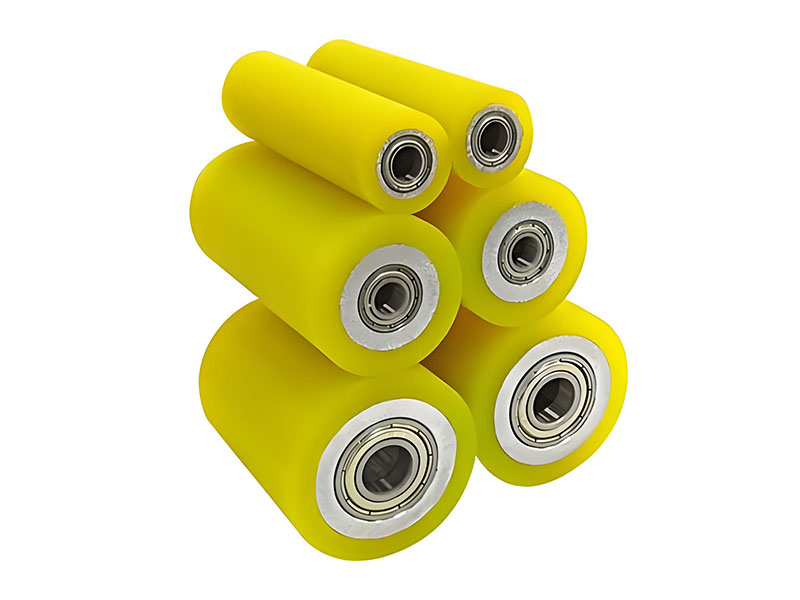
II. Four Essential Considerations When Selecting Polyurethane Wheels with Bearings
Faced with a vast array of products on the market, how can you make an informed choice? YALIDE recommends focusing on the following four dimensions, which are far more critical than solely considering price:
1. Bearing Type and Precision: Key to Load Capacity and Lifespan
Ball Bearings: Most common, suitable for medium-to-high speeds and moderate loads, offering flexible rotation.
Needle Bearings: Higher load capacity, ideal for heavy-duty, low-speed applications with limited radial space.
Precision-Grade Bearings: For applications like AGVs and precision conveyors, high-precision grades (e.g., P5, P6) are essential to ensure smooth, wobble-free operation.
Sealing Performance: Superior seals (e.g., double-sided contact seals) effectively prevent dust and moisture ingress, significantly extending bearing life in harsh environments.
2. Polyurethane Performance: Armor Against Harsh Conditions
Material Formulation: YALIDE’s core high-performance NDI polyurethane excels in wear resistance, tear resistance, compression set resistance, and dynamic heat generation control, making it particularly suitable for high-load, high-intensity continuous operation.
Hardness Selection: Choose appropriate hardness (typically indicated by Shore A hardness) based on load capacity and ground conditions. Excessive hardness may damage surfaces and reduce shock absorption; insufficient hardness may cause excessive rolling resistance and accelerated wear.
Tread Design: Flat tread, V-groove, gear tread, etc., should be selected based on compatibility with guide rails, drive methods, and other factors.

3. Integrated Structure and Load Capacity
Mounting Method: Ensure the wheel’s axle structure (e.g., threaded rod, through-hole, dual flange) perfectly matches your equipment’s mounting interface.
Load Calculation: Calculate both dynamic and static load per wheel, incorporating sufficient safety margins (typically recommended as total equipment weight divided by number of wheels, multiplied by a safety factor of 1.2–1.5). YALIDE engineers provide professional calculation support.
4. Environmental Compatibility
Temperature: Standard polyurethane wheels operate between -30°C and +80°C. Special formulations accommodate cold storage or high-temperature workshops.
Chemical Exposure: Select materials resistant to oils, solvents, or other chemicals based on contact requirements.
Cleanliness: Food and pharmaceutical industries may require contamination-free materials compliant with FDA certifications.
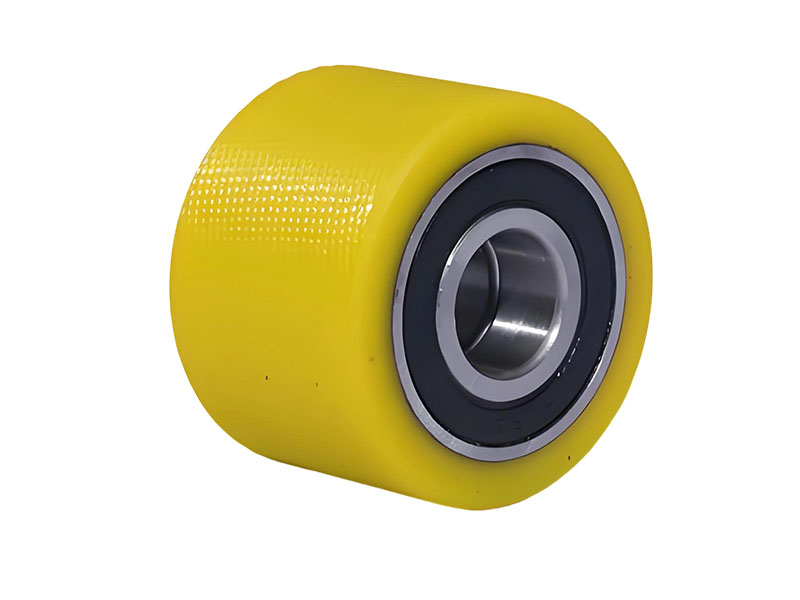
III. How much does a polyurethane wheel with bearings cost?
This is the ultimate concern for all procurement decision-makers. YALIDE’s response remains consistently candid and professional: “Prices range from tens to thousands of yuan, reflecting a vast price spectrum that truly embodies product value and technological sophistication.”
The core factors influencing price align with the selection criteria outlined above:
Material Cost: Significant cost differences exist between standard polyurethane and high-performance NDI polyurethane raw materials.
Bearing Cost: Standard commercial bearings can cost several to dozens of times less than high-precision, heavy-duty, or specially sealed bearings.
Processing & Design: Does it feature reinforced heavy-duty construction? Has it undergone precision dynamic balancing? Does it involve non-standard customization?
Brand & Service: Does it adhere to stringent quality control systems like IATF16949? Does it offer professional selection support, technical consultation, and comprehensive after-sales assurance?
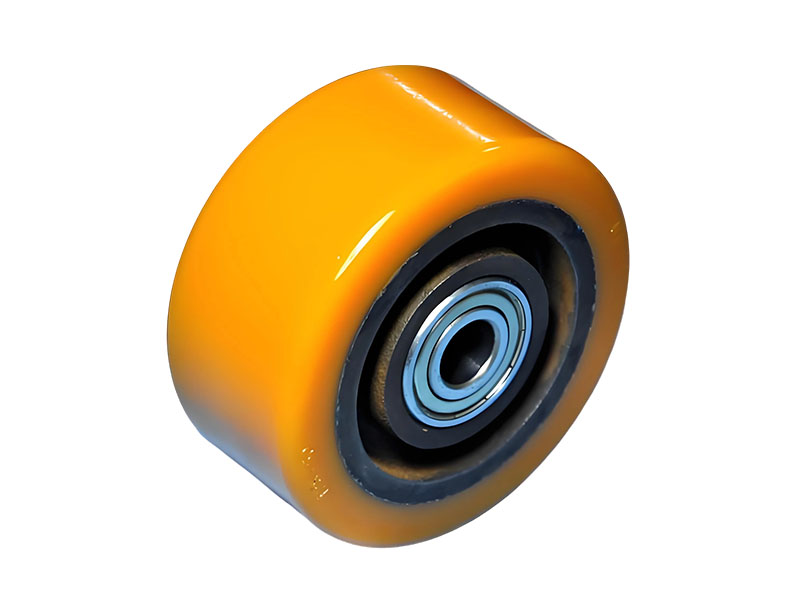
IV. YALIDE’S COMMITMENT
We never compromise core performance for low prices. We deliver optimized solutions based on Total Cost of Ownership (TCO): A high-quality wheel, with its extended lifespan, reduced failure rates, and superior energy efficiency, ultimately costs far less over time than cheap products requiring frequent replacement. When you provide specific application parameters, YALIDE will match you with the most cost-effective, precise solution and deliver a clear, transparent quotation.
Let expertise return to expertise. Choosing a polyurethane wheel with bearings is fundamentally selecting a long-term, reliable “power partner” for your equipment. With vertical integration capabilities spanning material R&D to precision assembly, and extensive experience serving global high-end clients, YALIDE is committed to becoming your most trusted partner.
For specific selection consultations or tailored quotations, please contact our technical team. Let us begin by understanding every detail of your operating conditions to jointly create a silent, efficient, and enduring mobility solution.


 Monday to Friday 8:00-17:00
 YALIDE >
News Content>Industry News> Polyurethane Wheels with Bearings—The Core Joints of Industrial Mobility
YALIDE >
News Content>Industry News> Polyurethane Wheels with Bearings—The Core Joints of Industrial Mobility 





 Telephone:
  Email:
  whatsApp: