In modern industrial transmission systems, polyurethane wheels with bearings represent the gold standard for load capacity, operational precision, and service life. This design, combining high-performance polymers with precision mechanical components, is redefining the technical requirements for mobility solutions across industries.
Core Structure Analysis: Triple Precision Integrated System
1. Material Engineering of the Polyurethane Wheel Body
Specialized custom high-grade polyurethane wheels feature a multi-layer composite structure. The wheel’s surface layer incorporates ceramic micropowder, with adjustable hardness ranging from 85A to 95A and a wear resistance coefficient ≥150. The intermediate cushioning layer employs a highly elastic formulation, achieving an impact absorption rate ≥60%. The inner reinforcement zone incorporates a fiber-reinforced mesh with a tear strength ≥100kN/m.
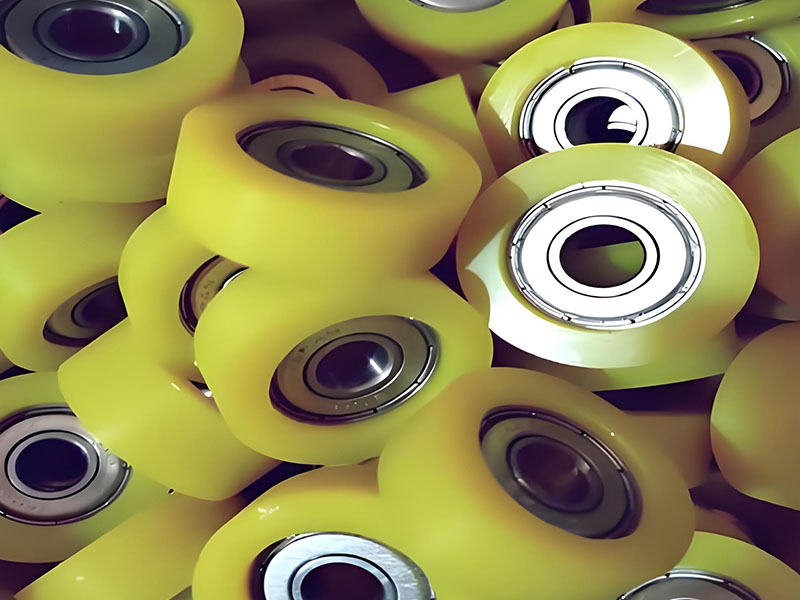
Specialized polyurethane wheel formulations address diverse application scenarios.Conductive polyurethane wheels feature surface resistivity of 10⁴-10⁹Ω, covering both anti-static and conductive requirements, typically used in semiconductor/LCD panel manufacturing. Temperature-resistant polyurethane wheels maintain stable performance across the full temperature range of -50°C to +120°C, designed for extreme environments. Chemical-resistant polyurethane wheels withstand acidic/alkaline environments (pH 1-13) and common organic solvents.
2. Precision Matching of Bearing Systems
Polyurethane wheel bearing types vary based on application scenarios and requirements. For example, deep groove ball bearings are suitable for polyurethane wheels in light-load, high-speed scenarios (rotational speed ≤3000 rpm). Conversely, tapered roller bearings are necessary for polyurethane wheels subjected to heavy loads with high radial/axial composite loads (load capacity ≥5 tons). For polyurethane wheels in precision equipment demanding high accuracy (runout ≤ 0.02mm), double-row angular contact bearings are required.
3. Mechanical Optimization of Hub Structure
Hub stress distribution optimization reduces maximum stress by 35% and triples fatigue life. Lightweight structure reduces weight by 25% while maintaining equivalent strength. Heat dissipation channel design controls temperature rise during continuous operation within 15°C.
Standardized mounting interfaces feature shaft hole tolerances at H7 precision grade with fit clearance ≤0.02mm. Standardized keyway design series covers shaft diameters from 6-50mm. Quick-change system with snap-ring fixation enables replacement time ≤5 minutes.
Professional Solutions for Application Fields
1. Automated Logistics Systems
AGV drive wheel applications: Diameter 150-250mm, load capacity 300-1500kg, rotational speed 50-300rpm.Standard AGV drive wheels require low-noise design (≤65dB) and rolling resistance coefficient ≤0.02. Post-implementation in smart warehousing projects, navigation accuracy improved to ±2mm with 18% energy savings.Conveyor guide wheels: radial runout ≤0.05mm, axial play ≤0.1mm. 24-hour continuous operation lifespan ≥3 years. Reduced failure rate by 70% in express sorting lines.
2. Industrial Manufacturing Sector
Polyurethane wheels for production line tooling carts: Dynamic load per wheel 500-2000kg, pushing force ≤150N (meets ergonomic standards), oil-resistant, impact-resistant, low maintenance.
Polyurethane wheels for heavy equipment transfer: Single-wheel load capacity up to 8 tons. These wheels have strict safety factor requirements, with a dynamic load safety factor ≥5. Under high-load conditions, floor protection is also required, with ground pressure ≤2MPa to safeguard precision surfaces.
3. Specialized Environment Applications
Cleanroom equipment polyurethane wheels comply with ISO Class 5 standards, ensuring dust-free operation. Bearings for these wheels utilize stainless steel with corrosion-resistant surface treatments.

Polyurethane wheels for low-temperature cold chain applications must maintain elasticity at 0°C with a retention rate ≥85%. Anti-freezing design is essential in cold environments, featuring specialized surface treatments to prevent ice adhesion. Wear resistance is inherent to all polyurethane wheels, with cold-temperature wear performance not less than 80% of that at ambient temperatures.
Professional Specifications for Installation and Maintenance of Polyurethane Wheels with Bearings
1. Installation Precision Control: Prioritize k6/H7 fit tolerance for shaft-to-bore clearance. Coaxiality tolerance must be ≤0.05mm. Preload must be precisely adjusted according to bearing type.
2. Maintenance System: Visual inspection for cracks, wear, or deformation. Operational checks for abnormal noise, vibration, or temperature rise. Performance evaluation of rotational resistance and runout. Polyurethane wheels with bearings require lubricant replenishment every 2000 operating hours or 6 months. Bearing operational status must be inspected every 5000 operating hours or 12 months.
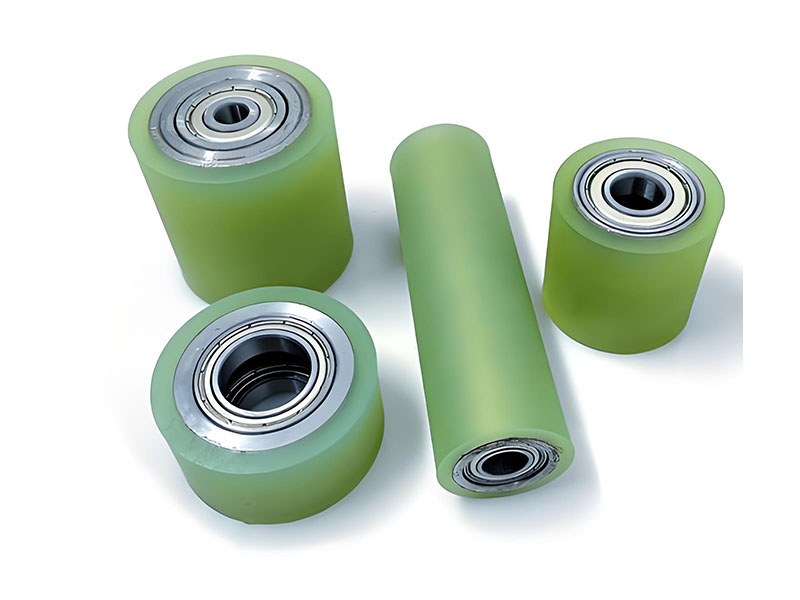
Manufacturer of Polyurethane Wheels with Bearings — YALIDE
Polyurethane wheels with bearings have evolved into a systematic engineering discipline integrating materials science, mechanical engineering, and intelligent sensing. They transcend simple transmission components, serving as critical technological enablers that ensure equipment precision, enhance operational efficiency, and safeguard production safety.
In the modern manufacturing industry’s transition toward intelligent, precision-driven, and eco-friendly practices, selecting the appropriate polyurethane wheel with bearing solution translates to higher reliability, lower operational costs, and stronger market competitiveness. Every rotation of the wheel should embody the perfect fusion of precision calculation and exceptional engineering; every application scenario deserves tailored professional technical support.
From material formulation to bearing selection, from structural design to intelligent monitoring—YALIDE delivers not only premium products but comprehensive solutions grounded in deep engineering analysis. We believe truly outstanding technical products should render complex technical details transparent to users, making exceptional performance the everyday standard.


 Monday to Friday 8:00-17:00
 YALIDE >
News Content>Industry News> Polyurethane Wheels with Bearings: The Perfect Fusion of Precision Transmission and Enduring Wear Resistance
YALIDE >
News Content>Industry News> Polyurethane Wheels with Bearings: The Perfect Fusion of Precision Transmission and Enduring Wear Resistance 





 Telephone:
  Email:
  whatsApp: