Forklift wheels are a critical component of the entire forklift system (including hand pallet trucks, electric forklifts, and stackers). Excessively worn tires compromise operational safety, stability, cargo protection, and the equipment itself. As the core load-bearing and mobility components, forklift wheels require replacement criteria based on three key factors: wear level, structural damage, and performance anomalies. Replacement thresholds vary slightly across wheel types (drive wheels, load-bearing wheels, swivel wheels).
I. Tread Wear Reaching Replacement Threshold
This criterion applies to non-metallic treads (PU, rubber, nylon) and is the most common replacement basis.
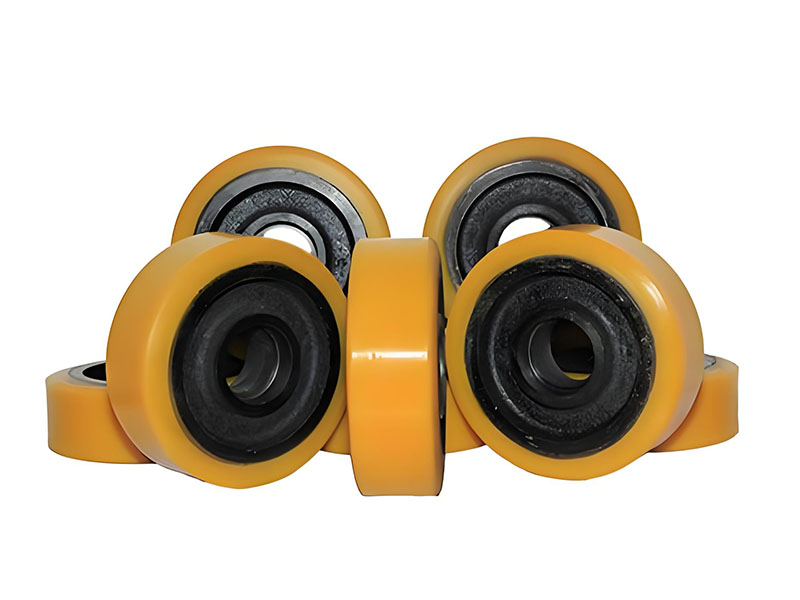
1. Threshold for tread wear
General industrial standard: Replacement is mandatory when tread thickness wears beyond 30% of the original thickness. For example, if the original tread thickness is 50mm, replacement is required immediately when the remaining thickness is ≤35mm.
Heavy-duty/high-frequency operation standard: Replace when wear exceeds 20% to prevent reduced load capacity and increased slippage risk due to excessively thin treads.
Special Requirements: When forklifts operate in cold storage or oily environments, the wear threshold is reduced to 15% because low temperatures and oil contamination accelerate tread aging and brittleness.
2. Uniform Wear Requirements
Replacement is required if the tread exhibits one-sided wear, localized indentations, or irregular grooves with deviations exceeding 3mm, even if overall wear is below 30%.
Unilateral wear causes forklift drifting, increases steering system load, and may lead to rollover risks. Severe wear on one side while the other remains intact may indicate axle misalignment or steering system issues; address these faults before tire replacement.
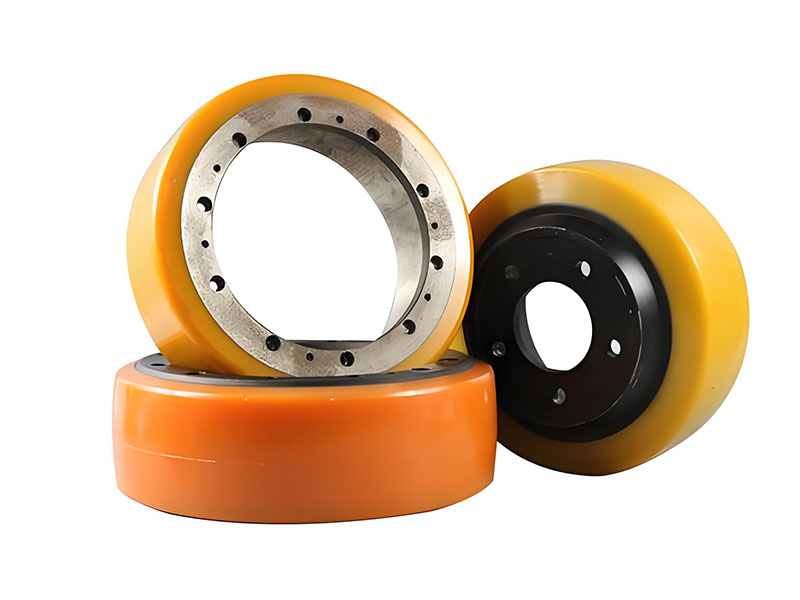
II. Structural Damage Replacement Criteria
Immediate replacement is mandatory for significant structural damage, regardless of wear level. Continued use is prohibited.
Cracking/Delamination of Tread Surface
PU/rubber wheels exhibiting radial cracks exceeding 50mm in length or 5mm in depth, or block-like delamination (area ≥20cm²). Nylon wheels displaying through cracks or cracks extending to the hub connection.
Separation of Hub and Wheel Surface
If debonding, loosening, or gaps >2mm occur between the wheel surface and the iron core/steel hub, accompanied by a “clunking” noise during rotation, immediate replacement is required. This condition causes wheel imbalance during rotation. In severe cases, the wheel surface may detach completely, leading to safety incidents.
Rusting/Deformation of Metal Components
Extensive rusting (affecting ≥30% area) on the hub or bearing housing, or deformation of the bearing housing causing wheel rotation to become jerky. Deformation or weld cracking on stainless steel hubs, resulting in loss of load-bearing strength.
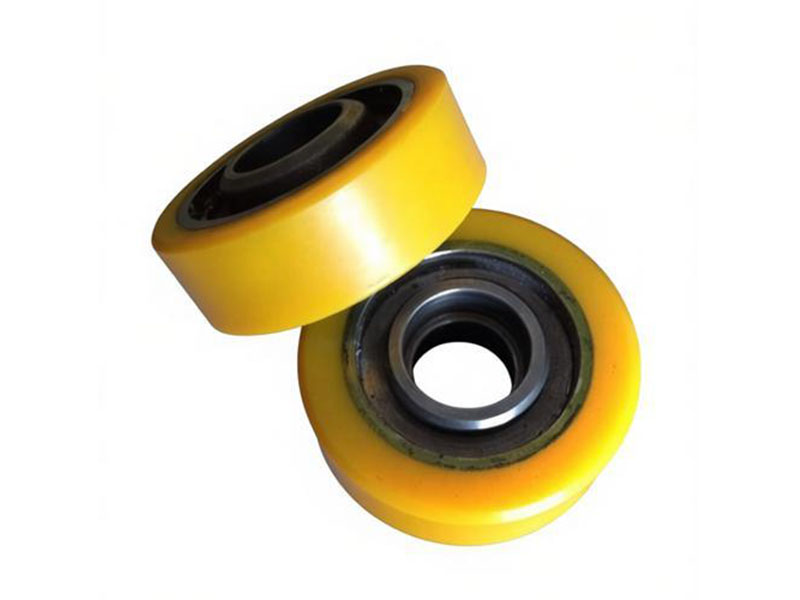
III. Replacement Criteria for Performance Abnormalities
Replace if the wheel shows no obvious wear or damage but exhibits the following performance issues during use:
Reduced Operational Stability:
Severe wheel rotation stuttering or abnormal noise persists after lubrication; or bearing damage prevents smooth wheel rotation. Swivel casters exhibit steering mechanism jamming, preventing 360° flexible turning. The entire vehicle exhibits “drift” during operation.
Abnormal Vibration and Noise:
Regular clunking sounds or vibrations are audible/felt even on level surfaces, possibly due to tire deformation or uneven wear. When fully loaded, the tire surface exhibits permanent deformation (deformation >5mm) that does not recover after unloading. Vibrations significantly intensify during operation, with drastically reduced shock absorption, compromising forklift stability and operator comfort.
Reduced Traction and Braking Performance:
During acceleration or braking on clean, dry surfaces, tires may slip, with braking distances exceeding safety standards (unloaded ≤2m, loaded ≤3m). Forklifts used in explosion-proof workshops may exhibit static electricity buildup on wheels (due to missing or malfunctioning anti-static devices). After loading cargo, vehicle stability deteriorates, creating a “floating” sensation.
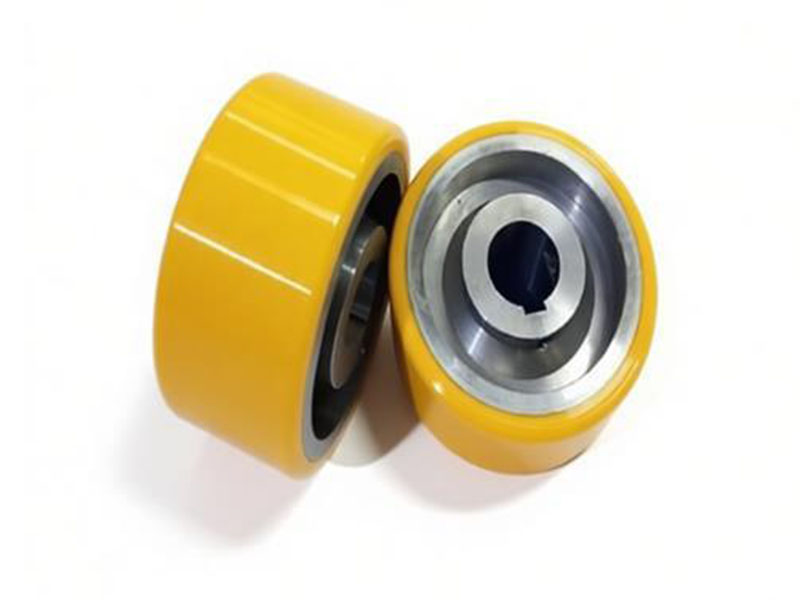
IV. Replacement Requirements for Different Forklift Types
Forklifts come in various types, and replacement requirements differ based on the specific model and application scenario.
Manual pallet trucks: Increased pushing/pulling resistance due to worn load wheels, requiring excessive effort to operate the handle; steering failure of swivel casters. Replace wheels when noticeable resistance significantly exceeds that of a new truck or when steering occasionally fails.
Electric Forklifts: Typically, replacement is needed when the tread on the drive wheels is completely worn down (tread depth ≤ 1mm); when wheel rotation speed becomes abnormal, affecting the forklift’s travel speed; or when severe tread wear causes reduced traction and drainage capability, making the wheels prone to slipping on smooth surfaces.
Cold Storage Forklifts: Frequent operation in cold environments causes low-temperature embrittlement and cracking on tire surfaces. Replace even slightly worn tires, as cold conditions accelerate damage from minor imperfections.
Explosion-Proof Forklifts: These forklifts have stringent tire requirements. Replace tires if material aging produces debris or if anti-static properties fail.

V. Measurement and Data Metrics (For More Accurate Judgment)
Diameter Measurement: Record the original diameter of new tires. For drive wheels, replacement should be considered when diameter wear exceeds 10-15%. Excessive wear affects the forklift’s transmission system and hydraulic lift height (as the mast lifting chain is linked to tire rotation).
Tread Depth Measurement: Use a depth gauge to measure the depth of the primary tread grooves, comparing it to the wear limit or new tire depth.
Operating Time and Environment Logging: High-intensity conditions (e.g., 24-hour shifts, highly corrosive environments, debris-heavy sites) significantly shorten tire lifespan. Even if tires appear visually acceptable, their internal structure may be fatigued.
VI. Summary
For forklift drive wheels and steering wheels, it is strongly recommended to replace both left and right sides simultaneously. This ensures consistent traction and diameter on both sides, preventing drifting and abnormal wear on the transmission system. When selecting tires, they must be matched to the operating conditions. If old tires exhibit abnormal wear patterns (such as uneven wear or feathering), inspect and repair potential causes (e.g., worn axle pins/bearings, frame misalignment, steering mechanism failure) before installing new tires.
Yalide Co., Ltd. specializes in designing and manufacturing premium wheels. We offer a comprehensive range of polyurethane-coated wheels, polyurethane rollers, rubber rollers, coated drums, coated bearings, metal shafts, mirror-finished rollers, spray-coated rollers, and more. Our products serve intelligent logistics equipment and smart production lines (automotive assembly lines, lithium-ion battery production lines, semiconductor manufacturing lines, LCD panel production lines, photovoltaic manufacturing lines, and other automated production systems).


 Monday to Friday 8:00-17:00







 Telephone:
  Email:
  whatsApp: