In industrial production, warehousing and logistics, office and medical settings, and many other fields, casters serve as indispensable “mobile companions.” As the two dominant categories in the market, rubber casters and polyurethane casters often leave purchasers facing a “difficult choice.” Some argue rubber casters offer superior elasticity and cost-effectiveness, while others champion polyurethane casters for their wear resistance, durability, and broad applicability. In reality, neither is inherently “better”—it all comes down to matching the right caster to the right scenario. Choosing correctly can enhance equipment efficiency and extend service life; choosing incorrectly not only increases replacement costs but may also hinder production and operational efficiency.
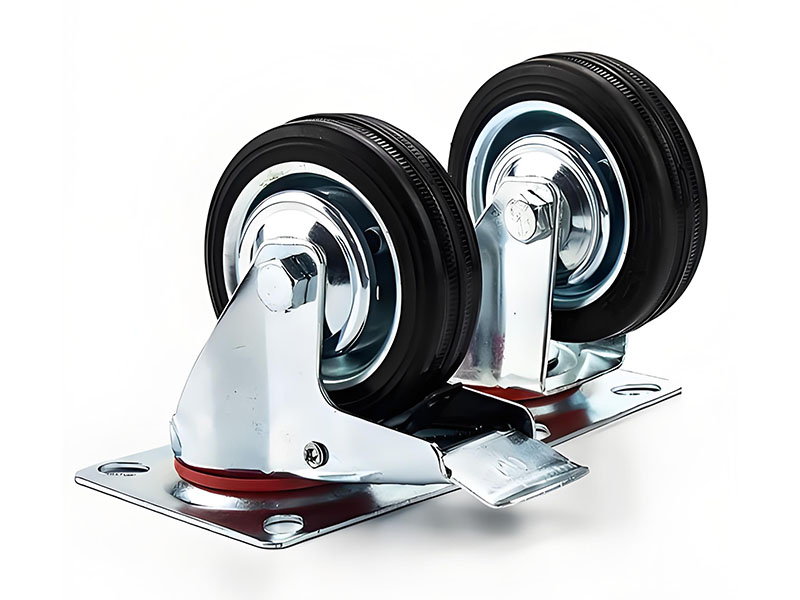
To determine their respective applications, we must first examine their core performance differences. Rubber casters excel in elasticity and shock absorption. The molecular structure of natural or synthetic rubber provides excellent vibration dampening, effectively absorbing jolts on rough surfaces while operating with minimal noise. Additionally, rubber casters offer superior slip resistance and adaptability to various surfaces, maintaining stable traction even on damp or lightly oily floors. However, rubber casters also have notable limitations. They exhibit poor wear resistance. Under prolonged high-frequency, heavy-load conditions, issues like flaking, cracking, and aging can arise. Wear rates accelerate significantly in dry, dusty environments.
Compared to rubber casters, polyurethane casters achieve a qualitative leap in wear resistance. The dense molecular structure of polyurethane provides strong tear resistance and compression set resistance, extending service life to 3-5 times that of rubber casters under normal operating conditions. More importantly, polyurethane casters offer an exceptionally wide hardness range, customizable from Shore A60 to Shore D80, accommodating diverse load requirements. They can be engineered as soft variants for quiet applications or as hard variants to support heavy equipment. Additionally, polyurethane casters exhibit outstanding resistance to oils and solvents. They remain stable and resistant to swelling or softening in environments with oil contamination or chemical agents, far surpassing the performance of rubber casters. However, polyurethane casters offer slightly less elasticity than rubber casters, resulting in weaker cushioning effects and edge-crushing resistance when moving over extremely rough surfaces.
From an application perspective, their suitability is clearly defined. Rubber casters are better suited for low-load, infrequent movement scenarios and environments demanding high shock absorption and quiet operation. For instance, in indoor cleaning applications, small floor sweepers and trash carts equipped with rubber casters operate quietly on tile and wood floors while preventing surface scratches. In outdoor temporary transport scenarios, rubber casters’ slip resistance and terrain adaptability ensure stable movement on gravel roads and muddy paths. Additionally, rubber casters offer lower production costs, making them a more cost-effective choice for budget-constrained, infrequently used small equipment like household carts and lightweight tool trolleys.
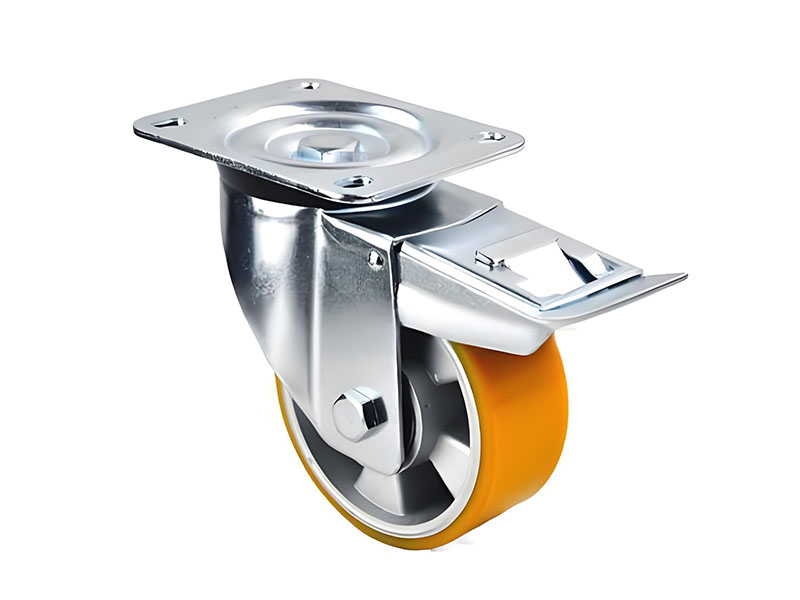
Polyurethane casters are the preferred choice for high-frequency, heavy-duty applications. In warehousing and logistics, AGVs, electric forklifts, and stackers perform hundreds to thousands of daily transport cycles. Polyurethane casters’ high wear resistance and low rolling resistance ensure prolonged stable operation while preventing damage to epoxy flooring. In healthcare settings, hospital beds and medication transport carts utilize rigid polyurethane casters. These casters enable quiet operation to avoid disturbing patients while handling heavier loads. They also resist disinfectant corrosion, meeting medical hygiene standards. In industrial production workshops, heavy-duty component transport carts and automated production line equipment benefit from high-hardness polyurethane casters, which significantly improve operational efficiency and reduce replacement frequency. Furthermore, in industrial environments with oil contamination or chemical corrosion, the weather resistance of polyurethane casters offers advantages that rubber casters cannot match.
Ultimately, determining whether rubber or polyurethane casters are superior hinges on clearly defining your specific needs: Rubber casters are the right choice when prioritizing low cost, strong shock absorption, and infrequent use. Polyurethane casters offer greater advantages when emphasizing high wear resistance, extended lifespan, and compatibility with high-frequency, heavy-load, or specialized environments. When procuring, avoid blindly pursuing “high-end” options. Instead, comprehensively evaluate factors such as floor conditions, load capacity, usage frequency, and environmental characteristics.
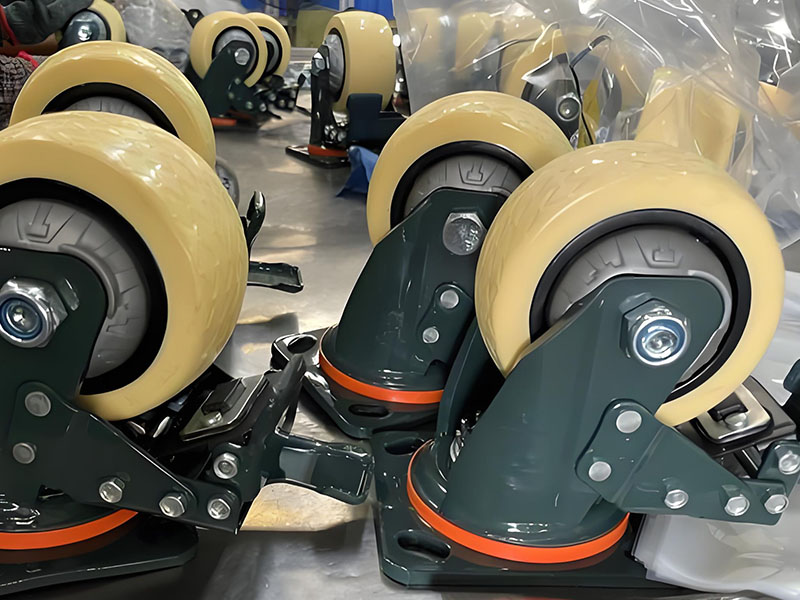
In summary, both rubber and polyurethane casters are high-quality products with distinct strengths, and neither is inherently superior. The core of selecting the right caster lies in precisely matching product performance to the usage scenario. Whether it’s the quiet cushioning of rubber casters or the wear resistance and durability of polyurethane casters, when used appropriately, they deliver maximum value, providing reliable support for the “mobility needs” of production and daily life.


 Monday to Friday 8:00-17:00







 Telephone:
  Email:
  whatsApp: